A family in Uttara spends six weeks planning their flat. They describe what they want to the designer. The designer nods, makes notes, draws some rough sketches. Work starts. Sixty days and eight lakhs later, the family walks into their finished apartment — and something is wrong. The wardrobe is too big for the room. The TV wall looks nothing like what they pictured. The kitchen feels darker than expected. It is not a disaster. But it is not what they had in their heads either.
Here is something that happens all the time in Dhaka, and almost nobody talks about it.
A family in Uttara spends six weeks planning their flat. They describe what they want to the designer. The designer nods, makes notes, draws some rough sketches. Work starts. Sixty days and eight lakhs later, the family walks into their finished apartment — and something is wrong. The wardrobe is too big for the room. The TV wall looks nothing like what they pictured. The kitchen feels darker than expected. It is not a disaster. But it is not what they had in their heads either.
This is not a story about a bad designer. It is a story about what happens when major decisions are made without anyone actually seeing the result first. And it happens every week somewhere in Dhaka.
A proper 3D design plan changes all of this completely. And yet many interior design firms in Dhaka still do not offer it — or charge for it separately as if it were a luxury add-on. It is not a luxury. It is the most basic tool for making sure you get what you paid for. This guide explains what a real 3D design process looks like, why it matters particularly in Uttara, and what questions to ask any firm before you hand over a single taka.
There is a lot of confusion about this, so let us be direct.
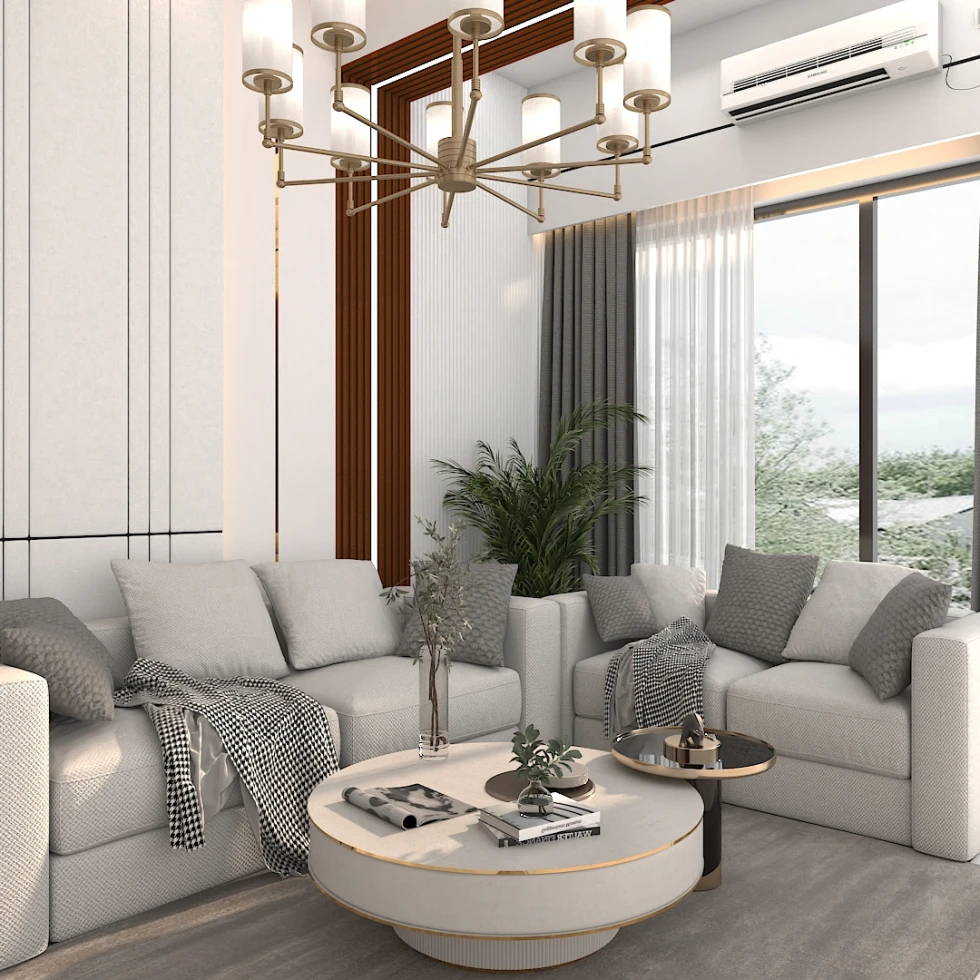
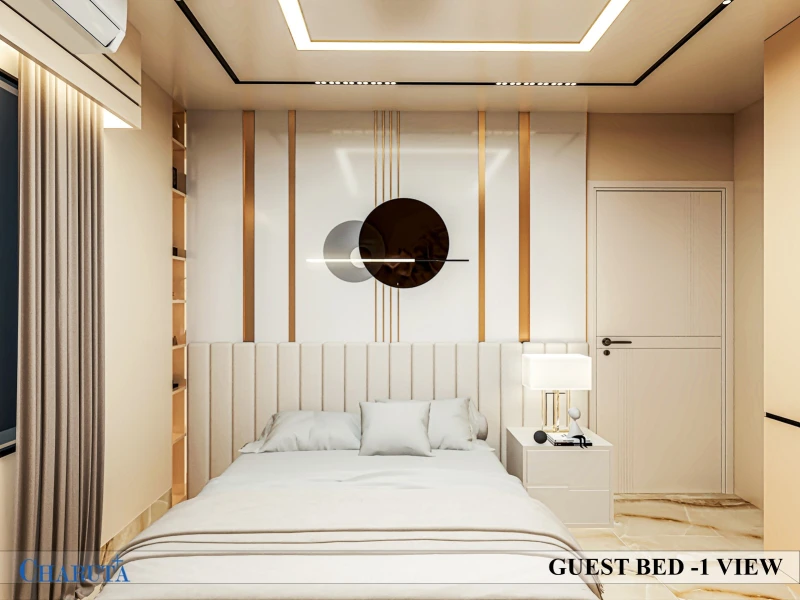
A proper 3D plan is a fully rendered, photorealistic digital model of your apartment — room by room — showing exact furniture placement, ceiling design, wall finishes, material choices, lighting, and colours. You can view it from any angle. You can change the sofa colour in minutes. You can move the kitchen island slightly and immediately see how it changes the feel of the room. You can compare two tile options side by side in your actual kitchen before either one gets purchased.
What a 3D plan is not is a rough sketch, a basic floor plan with colour blocks, or a SketchUp doodle. Some firms present these as 3D designs. They are not. Ask to see examples of actual project renders before committing to any firm — and compare them against the finished photos of those same projects. That comparison tells you everything about the quality and accuracy of their work.
Here is what a good 3D plan lets you settle before any construction begins:
|
💡 The honest truth: Most design regrets in Dhaka come from decisions made without visualisation. The wardrobe that felt too bulky once installed. The dark feature wall that made the room feel like a cave. The kitchen layout that seemed logical on paper but was awkward to actually cook in. A 3D plan catches all of these on screen — before they become expensive, permanent problems. |
Here is a practical side-by-side comparison at each stage of the design process. Read through this carefully — it makes the value very clear:
|
Decision |
Without 3D Plan |
With 3D Plan |
|
You approve a wardrobe design |
You imagine it from a sketch |
You see exact dimensions, colour and handles in 3D |
|
Tile pattern chosen |
Pick from a catalogue photo |
See the tiles across your actual floor in the design |
|
Wall colour decided |
Guess from a paint chip |
See the colour on your exact wall in your exact lighting |
|
Furniture placement |
Described verbally or on 2D plan |
Walk through the space virtually before it is built |
|
Change of mind mid-project |
Costs time and money to redo |
Changes happen on screen in minutes — before work starts |
|
Final result vs expectation |
Often a surprise — sometimes bad |
What you approved is exactly what you get |
That last row is the one that matters most: "What you approved is exactly what you get." That single guarantee is why 3D planning exists. It is not about impressing clients with technology. It is about closing the gap between what a family imagined and what actually gets built in their home.
Uttara is a planned township, which is both its biggest strength and its most interesting design challenge.
Most Uttara apartments — especially across Sectors 3 through 13 — follow fairly standard developer floor plans. The layouts repeat. Ceiling heights are typically 9 to 9.5 feet in newer buildings. Rooms are reasonably proportioned but not generous. Natural light varies significantly depending on which sector you are in and which direction your flat faces.
What this means practically is that in Uttara, small design decisions carry big visual weight. Choosing the wrong false ceiling depth in a 9-foot room can make a drawing room feel oppressive. Placing a large sectional sofa in a standard Uttara living room without careful measurement leaves the room feeling crowded. Getting the kitchen layout slightly wrong in an already compact kitchen makes every meal a frustration.
A 3D plan makes all of this visible before you commit. It is the difference between designing your specific flat in Sector 7 and making educated guesses based on what worked in someone else's flat in Dhanmondi.
Sector-by-sector things worth knowing
Sectors 3–6 (older buildings): Typically higher ceilings, larger rooms, older electrical and plumbing layouts. These flats have generous proportions that give a designer real room to work — but the infrastructure often needs updating. Budget a little extra for groundwork. The ceiling height is a genuine gift; use it properly.
Sectors 7–10 (mixed era): A blend of older spacious flats and newer compact ones sitting next to each other. Know precisely which type you have before designing. Assumptions are dangerous here — what works in one building may be completely wrong for the one next door.
Sectors 11–14 and new developments: Newer, more uniform layouts with standard ceiling heights and modern infrastructure. These flats look excellent with warm minimalist or Japandi design — clean lines, smart hidden storage, warm layered lighting. The 3D plan is especially useful for checking how much furniture is too much in these proportionally tighter rooms.
|
🏙️ Uttara insight: The most common design mistake we see repeated in Uttara is over-furnishing. Families arrive with furniture from a larger previous home and then wonder why the new flat feels cramped. A 3D plan forces the right conversation about furniture scale before anything is bought — not after it is already delivered and stuck in the lift. |
If you have never worked with a firm that includes 3D planning, here is exactly what the process should look like from your first phone call to the day physical work begins:
|
Stage |
What Happens |
When |
What It Covers |
|
Step 1 |
Site visit & measurement |
Day 1–2 |
Designer visits your Uttara flat, measures every room, notes ceiling heights, window positions, and existing fixtures |
|
Step 2 |
Brief & mood board |
Day 3–5 |
You share reference photos, discuss style, materials, and priorities. Designer prepares a concept mood board for approval |
|
Step 3 |
First 3D draft |
Day 6–10 |
Full 3D model of your flat created. See furniture, colours, ceiling, and lighting from any angle |
|
Step 4 |
Revision round |
Day 11–13 |
Request changes on screen — move furniture, change colours, try a different tile — before any work starts |
|
Step 5 |
Final approval |
Day 14 |
You sign off the 3D plan. Execution begins only after this. No surprises later |
|
Step 6 |
Execution & handover |
Day 15–75 |
Physical work begins. The approved 3D plan is your reference throughout the entire build |
The most important detail in that entire table: construction begins only after you have approved the 3D plan in writing. This is not optional. It is the entire point of having the plan in the first place. Any firm that wants to begin site work before the design is finalised and signed off by you is not running a professional process — and you will feel the consequences of that later.
|
⚠️ Watch out for this: Some firms show you a 3D render of a similar flat — not yours. The ceiling height is slightly different. The room proportions are close but not exact. The furniture that looks perfectly scaled in their render would actually be too large for your room. Always ask directly: is this 3D model built from the actual measured dimensions of my apartment? |
Let us answer this honestly because it comes up in almost every first conversation.
A proper 3D interior design plan for a full apartment — the kind that takes a skilled designer 5 to 8 days to produce — requires real work. The designer needs to visit your flat, take accurate measurements, build the digital model room by room, apply materials and lighting, and render it to a quality that is actually useful for decision-making. This is not a two-hour job.
Realistic price ranges for Dhaka:
That third point is the important one. If a firm quotes you a full interior design and execution project and then asks for a separate charge for the 3D plan, that is unusual and worth pushing back on. Most reputable Dhaka firms include the 3D design in the overall package because it benefits them too — it reduces misunderstandings, change orders, and arguments during execution.
Be cautious of:
|
✅ Fair expectation: When commissioning a full interior design and execution project with a reputable Dhaka firm, a complete multi-angle 3D plan should be part of the package. If they want to charge separately for it, negotiate it in. It protects you both. |
Whether you call us or someone else, these questions will separate the serious firms from the ones that are not ready to handle your home:
Uttara has become one of the most thoughtfully designed residential areas in Dhaka. The township planning — wider roads, more greenery, calmer surroundings — attracts families who think carefully about their living environment. That same thoughtfulness shows up in how they approach interior design.
Warm Modern Minimalism
Clean proportions, warm wood tones, hidden storage, and layered lighting. This style depends heavily on getting the scale right — one oversized sofa ruins the whole composition. The 3D plan makes this visible before anything is purchased or built.
Biophilic Design
Uttara's natural greenery makes it uniquely suited to bringing the outside in. Large indoor plants, natural materials — jute, rattan, raw timber — and windows treated as visual features rather than just light sources. In 3D, you can model natural light at different times of day and design the space to make the most of it.
Smart Storage Minimalism
A favourite in Uttara's standard layouts. Built-in wardrobes flush with the wall, under-bed storage, kitchen cabinets reaching the ceiling, a home where everything has a designated place. The 3D plan is essential here because storage design requires precision — and precision requires seeing the space accurately.
|
🌿 Why Uttara works so well for thoughtful design: Uttara was built with breathing room. Wider roads, more space between buildings, better cross-ventilation in many flats. An interior that works with these qualities — light, air, and calm — rather than fighting them with heavy furniture and dark colours, produces a home that feels genuinely restful. In a city like Dhaka, that is worth designing for. |
"We have already started some work without a 3D plan. Is it too late?"
It depends on how far along you are. If major carpentry decisions — wardrobes, kitchen, false ceiling — have not been finalised yet, a 3D plan can absolutely still guide those. If the flat is largely finished, the 3D plan becomes less useful for construction but very valuable for planning furniture placement, lighting upgrades, and soft furnishings. We can assess this properly during a site visit.
"Our flat is a corner unit with unusual angles. Can 3D design handle that?"
Corner units actually benefit more from 3D design than standard layouts — precisely because the unusual angles need to be planned carefully. The 3D model is built from your specific measurements, so those angles are reproduced exactly. It removes all the guesswork that makes corner units tricky.
"We want to combine the drawing room and dining room into an open plan. Is that feasible?"
Almost always yes in a standard Uttara flat — and it is one of the most impactful changes you can make. The combined space flows dramatically better, and the flat feels significantly larger. The 3D design shows you exactly how to zone the two areas visually without building anything, and how the furniture arrangement should change to make the open plan work properly.
"How early should we start the design process before moving in?"
For a full redesign, start at least three to four months before your intended move-in date. The 3D design phase alone takes two to three weeks. Execution for a full flat takes six to ten weeks after that. Families who start too late end up making rushed decisions they later regret. Start early, see it in 3D, approve it confidently, move in happy.
Before calling any design firm, have these ready. It makes your first meeting far more productive:
|
✅ Final thought: The 3D plan is the moment a project becomes real — when a family stops imagining their home and actually sees it for the first time. Every family in Uttara deserves that moment before the build starts, not after. |
|
Thinking about redesigning your flat? We would love to see your space and give you an honest estimate — no obligation, no pushy sales talk. Just a proper conversation about what is possible within your budget. 📞 Call or WhatsApp: 01711428372 📧 charutaplusbd@gmail.com | 🌐 www.charutaplus.com. We cover Gulshan, Banani, Uttara, Dhanmondi, Mirpur, Bashundhara and all of Dhaka. |
Please tell us about your residential home space or commercial space requirements. One of our creative, modern interior designers or interior decorator will walk you through our service options.